
Malta information
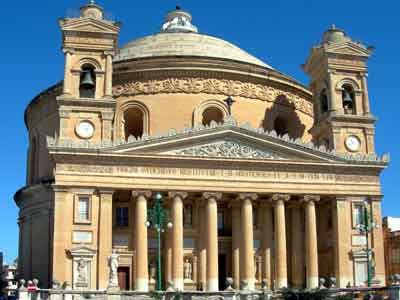
Photograph Mosta Church, Malta. Third largest unsupported dome in the world
Famous for a German bomb going through the dome and not exploding during a church service in World War 2
The inhabited Maltese Islands of Malta, Gozo & Comino are famous for their impressive sunshine record, the wealth of historical attractions, colourful fiestas, clear blue seas, legendary friendly hospitality, and fabulous churches. Malta makes for a great Mediterranean escape
The rocky Maltese Islands are located in approximately the centre of the Mediterranean sea between Sicily 95 km and Tunisia in North Africa 290 km. This central location places Malta in a very strategic position and the island has undergone 2 famous sieges in its history.
- The Great Siege by the Ottoman Turks in 1585 when the Knights of St John were based in Malta
- The second World war when the islands were attacked by Italian and German forces, earning the George Cross for bravery for its people defending the islands alongside the British
Malta - its very name evokes enduring images of the George Cross and the Knights of St John. And with over seven millennia of history to its name, it’s easy to see why. From Neolithic remains to fortified walled cities, this small island boasts a colourful and intriguing past and is often described as an open-air museum. Set in the heart of the Mediterranean, Malta’s strategic position established it as the prize jewel of many an empire. From the Romans to the Byzantines, from the Arabs to the Normans, all the great powers have fought to preside over Malta and have played a part in moulding the island’s rich and varied cultural heritage. Up until the 1960s, the island formed part of the British Empire and today there are plenty of reminders of Malta’s links with the United Kingdom - London-style red telephone boxes can still be seen on street corners and English is widely spoken. History aside, Malta is also known for its breathtaking scenery. The colours are striking – honey-hued stone against the deepest Mediterranean blue. Stroll through fields carpeted with wild orchids, poppies, tulips and anemones towards sleepy, off-the-beaten-track villages, followed by the scent of wild herbs, olives and citrus groves. So, if you’re looking for a destination that offers more than just a suntan, Malta is a great choice.
Beaches on Malta
The waters around Malta are widely regarded to be among the clearest in the Mediterranean. Mellieha Bay has a wonderful sweep of clean, gently shelving sand which benefits from the shelter of a sunny headland. In other resorts sand is scarce and bathing areas comprise mainly of smooth rocks. Snorkelling and scuba diving can be excellent as the array of fish and coral are simply breathtaking. You will find almost every imaginable water sport from windsurfing to paragliding to water-skiing.
Shopping
The island brims with artisan shops and stages numerous markets which sell locally-produced goods such as gold and silverware, lace and glass. There is good shopping to be had in
- Valletta, especially Republic Street and Merchants Street
- Sliema
- Paceville - In the Bay Street Centre
- Marsaxlokk
- Ta' Qali Crafts Village.
Nightlife
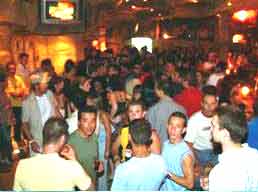
The crowds in the street outside Havanas in Paceville
Malta is well known for its nightlife,
- Malta's nightlife centre is in Paceville (pronounce Patchy ville) this area caters for the young and loud music is the name of the game. More information Paceville bars & clubs
- Bugibba is next in line for Nightlife but catering for a slightly older crowd.
- St Julian's which has plenty to offer in terms of bars, discos and nightclubs catering for older clientele.
- For traditional Maltese entertainment, meanwhile, take in a village fiesta. These are lively affairs with impressive firework displays and plenty of revelries..
- Early March sees a week-long carnival, replete with lively processions, decorated floats and dance troupes.
- Easter sees towns across the island stage spectacular Biblical re-enactments and Malta’s most famous celebration, the Valletta festival, takes place in April. Streets are decorated with banners and flags emblazoned with the Maltese cross and hundreds of locals parade in period costumes playing tambourines and trumpets to remember the courage of the Knights of Malta.
More information Malta's nightlife
Money / currency
The local currency is Euro
Banking & Money changing
- Banking hours are Monday-Thursday 08.30-14.30, Friday 08.30-15.30, and Saturday 08.00-12.00.
- Credit cards are widely accepted at most shops, hotels and restaurants.
- There are plenty of Bureau de change' offices for the changing of bank notes or travelers cheque's in all the resorts, and many hotels, restaurants & large shops will take foreign money. Although the banks usually give a better rate of exchange.
Euro - Pound conversion
For a rough and ready 1euro is slightly less, varying between 10 to 20 pence less that 1 pound sterling
Driving in Malta
- The good news for UK tourists and bad news for continental tourists is that the driving is on the left, the same as the UK.
- The roads are full of potholes which could be a good thing because this reduces speed, and the island is small so the slower speed does only extends the driving time by a few minutes
- There are rules of the road but the number of motorists that obey, or possibly know about them is to say at the least, debatable, therefore always drive with caution.
- The quality of local hire cars is also debatable, such things as important items such as lights and brakes, may not be to the standard you would expect in the UK. Because of this I would recommend the use of international car hire companies. Also, make sure you pay extra on insurance to cover damage to your car. Look for any damage on the car when you receive it and have written proof if there is any.
- Parking is very difficult in Valletta and it is easier to use Floriana car parking
Restaurants
From simple taverns overlooking harbours filled with luzzu, brightly-painted fishing boats, to grandiose restaurants offering a la carte gastronomy, there’s something to suit all tastes in Malta.
The island’s cuisine has been heavily influenced by the many cultures that have occupied the island over the centuries.
The most influential and not surprising is the very strong Italian, and to a lesser extent, North African influences to Maltese cuisine. Many restaurants serve anti-asta, pasta and spicy Moorish sauces incorporated into the local dishes.
Pastry appears heavily on many menus, such as ampuki pie is a particular favourite see Ampuki pie
Traditional Local dishes
- Bragioli (beef olives), made from a fillet of beef wrapped around a filling of bacon or ham, breadcrumbs and hard-boiled eggs, all slowly simmered.
- Fenek (rabbit), which is cooked a variety of ways.
When I was younger rabbit used to be a very popular meat dish, now it is rarely seen on a UK menu which is a pity because although a similar texture to chicken it has a far more stronger and better flavour. Take the opportunity to try this popular local dish.
- Kusksu, a traditional springtime soup made with tomatoes and broad beans.
- Ampuki pie which combines fish, spinach, cauliflower and chestnuts in shortcrust pastry.
Buses on Malta & Gozo
Malta is very well serviced by local transport with very frequent buses on most tourist routes. The quieter island of Gozo also has a good bus network but they are not as frequent
Malta buses Paceville buses Sliema buses St. Julians buses
Tourist Information Offices
Malta Information Offices
Valletta
Valletta Waterfront
Malta International Airport -Welcomer’s Lounge Luqa
Inquisitor's Palace, Main Gate Street, Birgu
Marsaxlokk
Mdina
Mellieħa
Sliema (Info Desk housed in the Plaza Commercial Centre)
St. Paul's Bay
Malta Information Offices
Victoria
Mġarr Information Booth
Telephone
Country dialling code: 356.